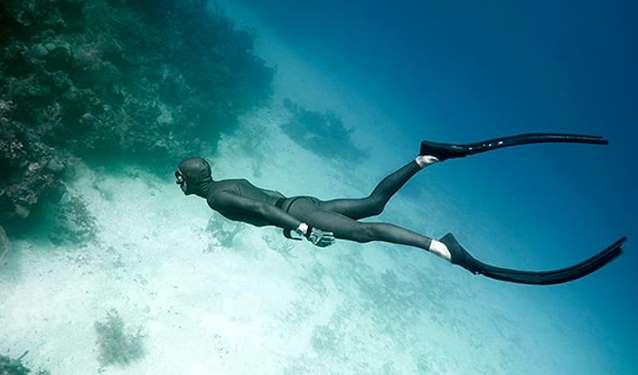
One of the biggest myths about scuba diving in Greece is that there isn’t much to see beneath the surface. Many people believe that truly spectacular underwater experiences only exist in destinations like the Red Sea, the Maldives, or other tropical locations.
The reality is quite different.
With one of the world’s longest coastlines, thousands of islands, and an incredibly diverse underwater environment, Greece offers exceptional scuba diving opportunities. Every dive can reveal something different, whether you’re a beginner taking your very first dive or an experienced diver with hundreds of logged dives.
Let’s explore what awaits beneath the surface of the Greek seas.
The first thing that surprises almost every new diver isn’t a large fish.
It’s the silence.
The moment you descend beneath the surface, the noise of everyday life disappears. All you hear is your own breathing. Your movements become slow and effortless, your body reaches neutral buoyancy, and for the first time you experience what it feels like to move freely in a three-dimensional world.
For many people, this feeling is even more powerful than any marine creature they may encounter.
Perhaps this is why scuba diving becomes almost addictive—in the best possible way. Not because of adrenaline, but because people find themselves wanting to experience that unique feeling of calm, relaxation, and mental clarity over and over again.
A typical recreational dive lasts around 40 to 60 minutes.
During that time, your mind simply lets go. It’s as if all your worries remain floating on the surface while you stay completely present beneath the water. Down there, there is only your breathing, your bubbles, and the moment you’re living.
For many divers, that feeling is the greatest reward of every dive.
The Mediterranean Sea is home to hundreds of fascinating marine species.
During a dive in Greece, you may encounter:
Every season offers different underwater scenery and unique animal behaviour, making every dive a new experience.
Although they are not everyday encounters, many divers are lucky enough to meet:
These encounters usually last only a few moments—but the memories often last a lifetime.
Greek diving isn’t only about marine life.
Much of the underwater scenery consists of spectacular rocky reefs, vertical walls, underwater canyons, caves, swim-throughs, and natural arches shaped over thousands of years.
Even a dive with fewer fish can become unforgettable simply because of the dramatic underwater landscape.
Another fascinating chapter of Greek scuba diving is its shipwrecks.
From small wooden boats to large cargo ships, the Greek seabed hides countless stories waiting to be explored.
Among the most impressive wreck dives near Athens are Avantis III at Dorousa Island, the historic Patris at Koundouros Reef, and of course Eurobulker X in Dilessi.
At DIVENESS, Eurobulker X holds a special place in our hearts. Over the last two years, it has become the home of our PADI Wreck Diver Specialty course.
More than 50 divers have already earned their certification with us on this wreck through a training philosophy that emphasizes safety, careful skill development, thorough dive planning, and responsible wreck exploration.
For many of our students, it becomes one of the highlights of their entire diving journey.
This may be one of the most beautiful aspects of scuba diving.
No two dives are identical.
Even if you visit the exact same dive site ten times, you’ll almost certainly discover different marine life, different behaviour, changing visibility, unique lighting conditions, and new underwater experiences.
And if you truly want to experience a dive site from a completely different perspective, you should visit it at night.
Night diving transforms the underwater world.
Many creatures that hide during the day become active after sunset, while species commonly seen during daylight disappear into their shelters. Your dive light reveals colours that daylight often hides, and every movement feels like genuine exploration.
It’s like diving in a completely different location—even though you’re visiting exactly the same site.
This is one of the reasons why many divers continue diving for decades without ever getting bored.
Many people are surprised to discover that excellent diving can be found just a short drive from Athens.
Some of the region’s best-known dive sites include Kyra-Leni Wreck, Seal Cave at Patroklos Island, Arzenta Cave, Pofitou Reef, and Kamila Island.
These sites offer impressive underwater landscapes, diverse topography, rich marine life, and unforgettable diving experiences.
Their proximity to Athens makes the area an outstanding destination for both newly certified divers and experienced underwater explorers looking for something new.
What you discover underwater isn’t just fish.
It’s an entirely different world.
A world filled with tranquillity, marine life, colours, and experiences that most people will never have the opportunity to witness.
Every dive is different.
Every descent is a new adventure.
And perhaps that’s the biggest reason why people who start scuba diving often find it impossible to stop.